
Insights and Stories from Lawrence Finn's Studio
Join me as I share the journey behind my prints, artists books, exhibitions, and the occasional deep dive into art and my creative process.
5/8/20243 min read
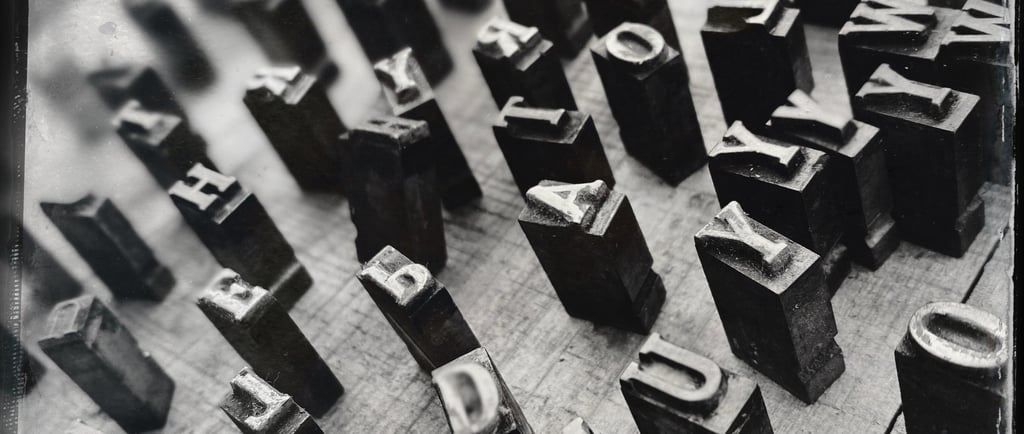
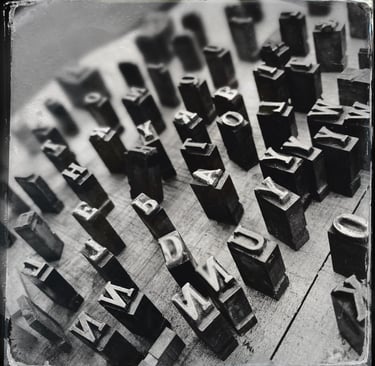
Most days you can hear the soft rhythm of a printing press turning before you even step through the studio doors. The scent of ink and incense lingers in the air. Light catches on woodblocks, metal type and carved lino as a student leans’ in to watch the moment a sheet of paper lifts to reveal itself as a freshly pulled print.
This working artist’s studio is a refuge from the world as much as it is a bridge into other worlds. It is a place of concentration, discovery and excitement, where learning happens through making, and making is the beginning of the larger conversation we all share about personal meaning.
At the heart of the studio is Lawrence Finn, a practicing printmaker with more than 35 years’ experience. He is also a fully qualified art teacher, registered with the Victorian Institute of Teaching (VIT). With decades of experience across primary and secondary schools, TAFE and university lecturing, Finn brings rare depth to the space: professional practice grounded in educational expertise. Teaching is not an afterthought here — it is central to the studio’s identity.
Classes are designed for every stage of experience. For primary students, sessions introduce the magic of printmaking in accessible and playful ways. There is nothing quite like the delight of a child pulling their first print — bold shapes emerging from inked surfaces they have carved themselves. These early experiences build confidence and curiosity, feeding the imagination and strengthening engagement across disciplines, from literature to mathematics and science.
At secondary and TAFE level, the focus shifts toward skill development, refinement and mastery. Students build technical fluency while strengthening foundation skills such as drawing. More critically aligned capacities — composition, colour, and visual storytelling — are carefully nurtured. The studio moves fluidly between illustration, with its disciplined mechanics, and art, with its layered engagement in theory, history, emotion and aesthetics. It is here that emerging creatives begin to define meaning for themselves and take their own voices seriously. They are guided by a teacher who understands curriculum frameworks, studio practice, and the importance of communication.
University workshops are structured for those with prior experience, facilitating deeper mechanical, aesthetic and intellectual engagement. Conceptual depth, technical precision and a refined sense of play are essential. Students engage with the traditions of printmaking while pushing confidently into contemporary expression.
Primary concerns such a safe workshop procedures and disciplined technique are embedded in all age groups, a reflection of Finn’s formal training and commitment to high standards. Though “craft” is frequently an unfashionable word in contemporary art discourse, craft remains foundational in every serious studio, from school to TAFE to university. Skill, patience and material understanding underpin creative freedom.
The processes themselves offer rich possibilities. Linocut provides bold, graphic immediacy. Drypoint introduces delicate line and velvety tonal depth. Etching balances chemistry and creativity, linking centuries-old techniques with modern experimentation. Wood engraving, with its meticulous engagement with end grain, demands patience and rewards disciplined drawing. Together, these practices sustain traditional printmaking within a contemporary context.
The studio is more than a place to acquire technique. It engenders community, conversation and connection. Small class sizes foster dialogue and encouragement. Breakthrough moments — a resolved composition, a successful edition, a surge of confidence — are shared and celebrated.
Professionalism and passion exist side by side. VIT registration ensures educational standards are addressed and met, while ongoing studio practice keeps teaching current and authentically engaged with the broader art world. The result is a space that bridges generations and educational sectors, from beginners to tertiary students refining their skills and learning new skills.
As the press turns and another print transforms from concept to being, the studio is a reminder of the enduring power of art shaped by skilled hands and ideas forged in the crucible of personal meaning. In an increasingly digital world, this is a place where tools, imagination and discipline meet and one in which creativity continues to be shared, imbibed and inspired; one drawing, one idea, one print at a time.
Contact
Phone
+61 0412 659 838
© 2025. All rights reserved.